Hard Water Spots, Stains and Cracks on Granite
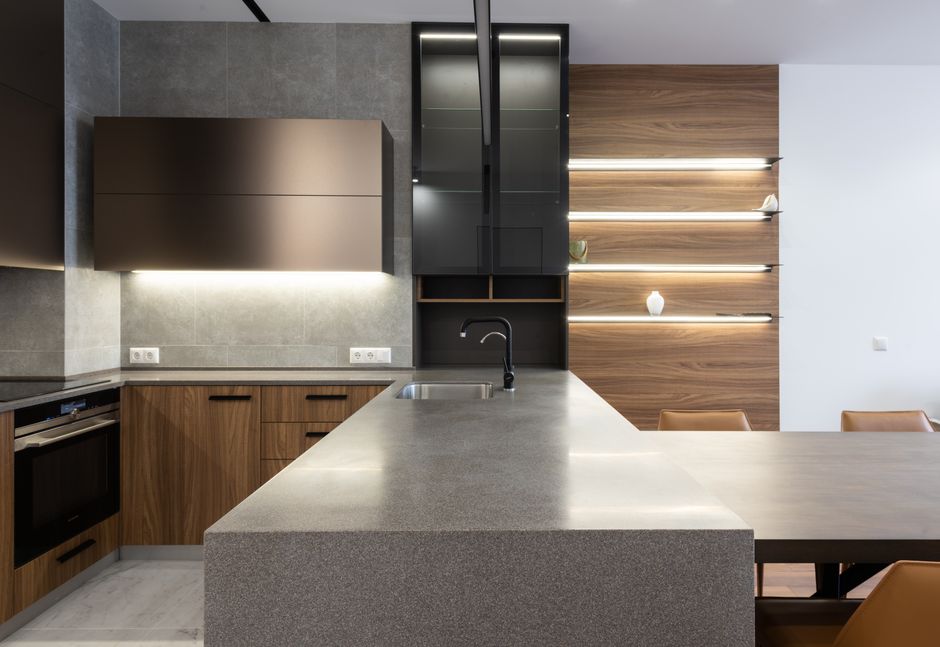
Wipe the faucet deck dry with a soft cloth after every use, because that single habit prevents most of the trouble that shows up on granite in Riverside, CA kitchens, and the notes at granite countertop installation riverside the jack condo start there before moving on to anything harder.
Hard water rings and spots

Water in the Inland Empire is hard, and it carries calcium and magnesium. As a drop evaporates beside the faucet, the minerals stay behind as a white ring or crust. That is a deposit sitting on the surface. It does not mean the stone is damaged. Wiping and drying the area near the faucet stops most of it. Once a ring has formed, a pH neutral stone cleaner and a soft cloth will usually lift it.
Why vinegar is the wrong fix
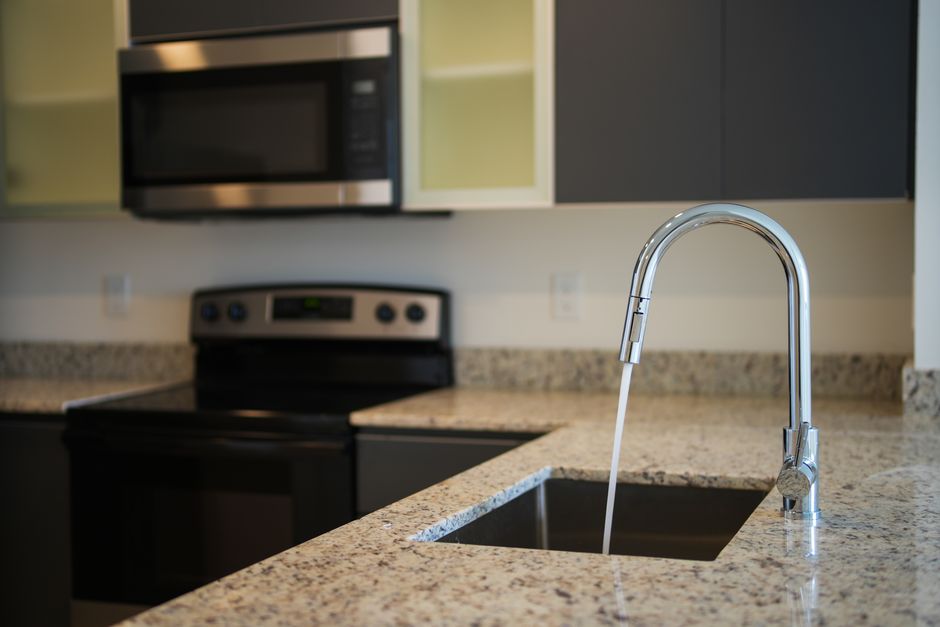
Vinegar and other acidic cleaners get reached for first, and they are a poor choice. Acid can weaken the sealer on a slab. It can also etch any stone with calcite in it, which includes marble and some quartzite. Etching leaves a dull patch that cleaning will not remove. Use a pH neutral stone cleaner on granite, soapstone and everything else.
Oil stains that darken the stone
Granite can stain. Cooking oil, butter and skin oil soak in and darken the stone from within, so scrubbing only works the oil around. The usual fix is a poultice, a paste of absorbent powder spread over the spot, covered, and left to draw the oil up as it dries. It may take more than one round on a deep stain.
Fissure or crack
Many slabs have thin lines that are natural fissures, part of the crystal structure. Run a fingernail across the line. A fissure usually cannot be felt, while a crack usually catches the nail. Not every visible line is structural. Real cracks tend to start at weak points, mostly the narrow section of stone beside a sink or cooktop cutout. Seam placement and support under those cutouts matter for that reason, and a remnant cut with narrow returns around a cutout is more at risk than a full slab.
Heat and edge chips
Granite resists heat, but a pan straight off a burner can cause thermal shock from rapid temperature change, so keep a trivet at hand. Chips along the edge come from knocks, usually on a sharp edge profile or a long overhang. A small chip can generally be filled with tinted epoxy or resin and polished level. An eased edge is more forgiving than a square one. Near the Santa Ana River or Mount Rubidoux, dust from the Santa Ana winds also settles on the surface, so wipe it before it gets ground in.