Granite Countertop Installation in Riverside, CA

Plain answers about granite countertop installation in Riverside, CA: how to prepare, what the stone needs, how the work is done, and how dry heat, hard water and seismic activity in the Inland Empire affect the result.

What We Cover

Granite Countertop Installation in Riverside, CA

Granite countertop installation in Riverside County follows one fixed sequence: cabinet prep, template, fabrication, install, seal. This site is a neutral guide for homeowners planning that work, whether the kitchen sits near the Mission Inn, close to University of California, Riverside, or out in Jurupa Valley.

Each step depends on the one before it. A skipped check at the cabinet stage shows up later as a rocking slab, a gap at the wall, or a seam that sits proud.

Cabinet Prep and Templating

Cabinets have to be level, square and solid before stone is ordered. The crew checks base boxes with a long level, shims low spots, and fastens loose cabinets to the wall. Old tops come off, the sink and plumbing are disconnected, and the work area is cleared.

Templating comes next. The crew records the cabinet run, sink cutout, overhangs and wall angles on thin strips or with digital measuring. Walls are rarely straight, so the template captures every bend the stone must follow.

Fabrication, Install and Seal

Fabrication turns the slab into finished pieces. The shop cuts to the template, shapes and polishes the edges, and cuts the sink and cooktop openings.

On install day the pieces are dry fit first, then set on adhesive, with seams pulled tight and color matched. The sink is mounted and the backsplash joint is caulked. Sealer goes on last, and it needs time to cure before heavy use because granite absorbs liquid to varying degrees.

Local Conditions That Change the Work

Heat and wind affect the job. Hot dry summers and Santa Ana winds make adhesive skin over quickly and push dust toward fresh seams, so crews shade the area, close doors and work in a steady order.

Hard water is common across the Inland Empire and leaves mineral spots near faucets, so wiping the surface dry helps. Southern California is also seismically active, which is a reason to confirm the stone is well supported and bonded to sound cabinets. Homes from the slopes of Mount Rubidoux to the Santa Ana River corridor share these same conditions.

Guides

The guides cover kitchen preparation, thickness, edge profiles and sealers, the path from templating to final install, working through Inland Empire heat and Santa Ana winds, hard water spots, stains and cracks, and how to judge installation quality.

Latest Guides

A bright modern kitchen with granite countertops and stainless steel appliances.

Is Granite a Good Choice for an Outdoor Kitchen in Riverside?

2026-10-26

Granite is a good choice for an outdoor kitchen in Riverside, as long as the slab is true granite, the base is built for weather, and the top is sealed with an exterior-rated product. The stone itself handles sun and heat better than most countertop materials. The problems that show up outdoors usually come from resin, color choice, framing or sealing, not from the granite.

Why the Sun Is Not the Problem
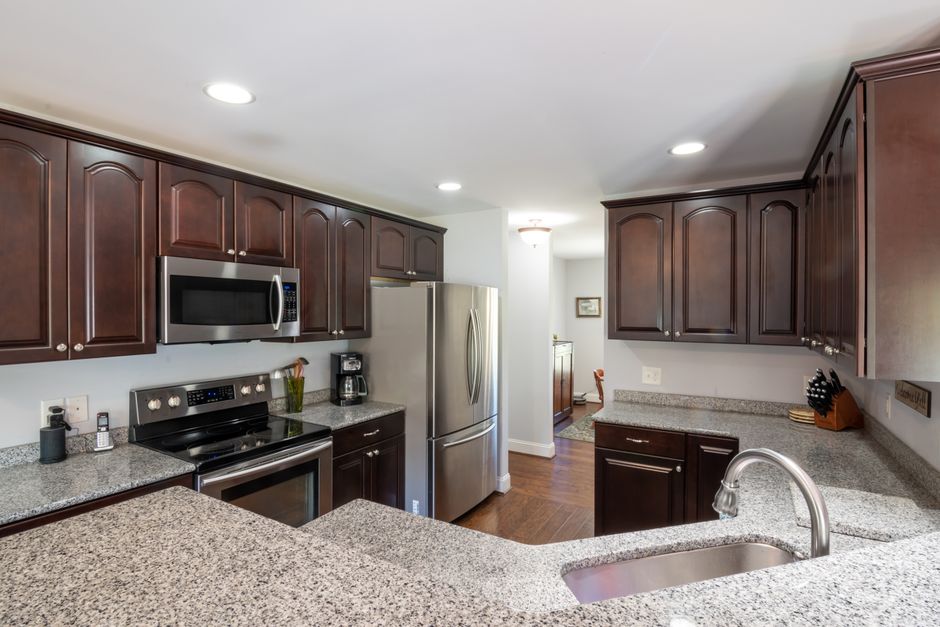
Stylish kitchen featuring dark wood cabinets, granite countertops, and stainless steel appliances.

True granite is a dense igneous stone, and its mineral color does not fade in sunlight. That makes it one of the better natural stones for an uncovered patio, which matters in Riverside, where strong sun hits most of the year.

The weak point is not the stone but what has been added to it. Many commercial slabs are resin treated at the factory to fill pits and micro fissures and to deepen the polish. Some of those resins can yellow, haze or lose gloss after long UV exposure. A slab that looked flawless in a showroom can develop dull or amber patches after a few summers on an open patio.

Ask the fabricator two direct questions: is this slab resined, and is that resin meant for exterior use? If the answer to the first is yes and the second is a shrug, pick another slab.

Quartz Is Not a Substitute

Engineered quartz is a different product from granite. Its resin binder can discolor and weaken in direct sun, and most quartz makers do not warrant outdoor use. If a quote lumps the two together for an uncovered kitchen, treat that as a red flag.

Choosing Color and Finish for Riverside Heat
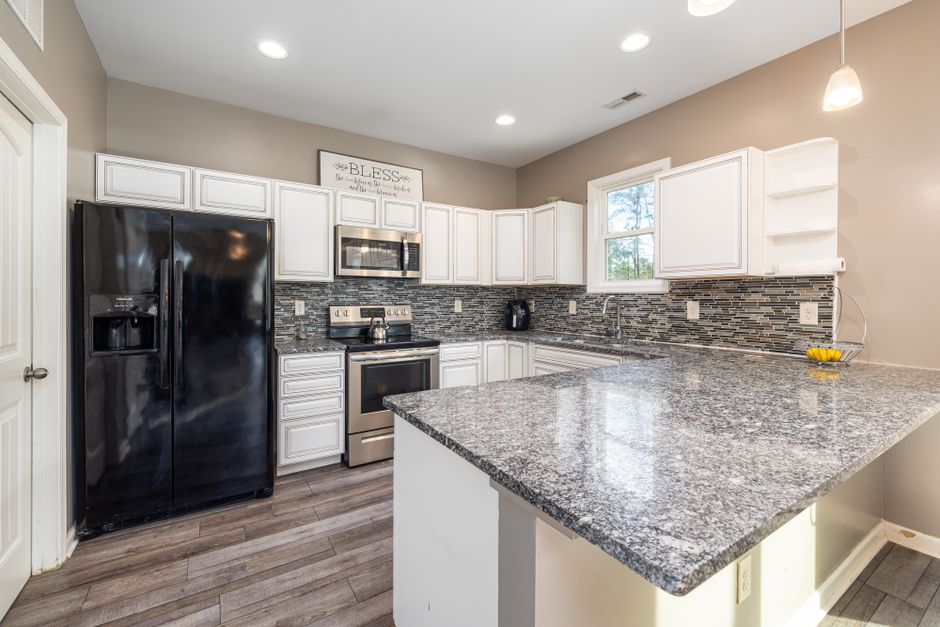
Elegant kitchen with sleek granite countertops and black appliances, perfect for modern living.

Dark slabs such as black or deep brown granites absorb a lot of heat. On a summer afternoon in Riverside's inland heat, they can become uncomfortable or even painful to touch. Lighter colors and patterned slabs stay noticeably cooler, and they also show dust and water spots less.

Finish matters just as much:

  • Polished throws hard glare in full sun and shows hard water spots.
  • Leathered or brushed cuts glare and hides spotting, which makes it the practical pick for most patios.
  • Honed looks soft but is more open and usually needs sealing more often.

Look at the actual slab in daylight before fabrication starts. Showroom lighting can hide color shifts, resin patches and fissures that become obvious on a sunny patio.

The Base Matters as Much as the Stone

An outdoor granite top is only as stable as what holds it up. Use a noncombustible, rot-proof structure such as concrete block or steel framing with cement board. Wood framing absorbs irrigation water, moves and rots, and that movement is a common cause of cracked outdoor tops.

Thickness helps, but it does not replace support. A 3 cm slab is commonly chosen outdoors for stiffness, yet a thicker slab alone does not prevent cracking. The base and the supports do more of that work.

Overhangs and Bar Seating

An unsupported overhang is where outdoor slabs most often snap. Any bar-height overhang needs hidden steel supports or corbels sized to the span. Ask how the fabricator plans to support it before you approve the layout.

Edges

Ease or round the exposed edges and give the top a slight drip edge so water sheds instead of pooling. Sharp square edges chip easily when grill tools, coolers or patio furniture bump them.

Expansion, Seams and Joints

Riverside sees large swings between hot afternoons and cool nights, so stone and masonry move. Leave proper expansion gaps where the granite meets stucco walls or masonry, and do not wedge the slab in tight. Fill those joints with a flexible, exterior-rated sealant rather than rigid grout.

Seams need the right adhesive too. Slab sections should be bonded with a UV-stable, exterior-rated epoxy. Standard indoor knife-grade polyester adhesive can yellow and fail in sun, leaving a visible dark or amber line across the counter.

Grill Cutouts and Heat

Granite tolerates heat well, but it is not fully heatproof, and a built-in grill puts concentrated heat right at the stone.

  • Radiused corners. Grill cutouts need rounded inside corners. Sharp square corners concentrate stress, and cracks often start there. The radius also helps the stone tolerate heat cycling around the opening.
  • Manufacturer instructions. Follow the grill maker's installation requirements, including any insulated jacket and required clearances. Intense radiant heat against a cutout edge, or resin-filled areas near the firebox, can scorch, discolor or crack.
  • No thermal shock. Do not set a ripping hot cast iron pan or griddle plate straight from the flame onto the stone, especially on a cool morning. Make trivets a habit. Resin-filled spots are the first to scorch.

Sealing an Outdoor Granite Top

Seal outdoor granite with a penetrating (impregnating) sealer rated for exterior use. Avoid topical coatings, because films peel and cloud in sun.

Sealing slows absorption; it does not make granite stain proof, and one application will not last the life of the counter. Sun, heat and rain break sealer down faster outdoors than indoors, so test at least once a year, ideally in spring before grilling season. Put a few drops of water on the surface. If the stone darkens within a few minutes, it is time to reseal.

Everyday Care in a Riverside Backyard

Grease and Marinades

Grease and marinade oils are the main staining risk at an outdoor kitchen. Wipe spills promptly. An oil stain that has soaked in can usually be drawn out with a poultice rather than by scrubbing.

Hard Water and Sprinklers

Riverside's hard water leaves white mineral spots, and sprinkler overspray is a frequent cause on patio counters. Aim irrigation heads away from the island, and wipe the surface dry after rinsing.

Cleaning Products

Clean with a pH-neutral stone cleaner or mild dish soap. Repeated vinegar, bleach or harsh degreasers wear down the sealer, and some slabs sold as granite contain calcite that acids will etch.

Citrus

Backyard citrus is everywhere in Riverside. True granite generally shrugs off lemon or orange juice, but some stones sold under granite trade names are actually marble or carbonate-bearing rock that will etch. Test a fabrication offcut with a few drops of lemon juice for several minutes before you commit. Not everything sold as granite resists acid.

Dust, Ash and Pool Splash

Santa Ana wind days bring fine dust, and fire season can bring ash. Both are gritty, and dragging a dry cloth or dishes across them can dull the finish over time. Rinse or wipe with a damp cloth first. Rinse ash off promptly, because it can be alkaline and messy on a freshly sealed surface.

If the kitchen sits near a pool, chlorinated or salty splash leaves residue and spots. Rinse with fresh water, and plan the layout so the counter stays out of the splash zone.

Freeze Concerns Are Minor Here

Freeze and thaw damage is a small concern on Riverside's valley floor, where hard sustained freezes are uncommon. The advice changes for mountain cabins at higher elevations nearby, where water in fissures can freeze and widen them. For a typical Riverside backyard, heat and UV are the bigger issues.

Give the Top Some Shade

A pergola, shade sail or fitted cover lowers surface temperature, slows sealer breakdown and protects any resin from UV. It is one of the simplest ways to extend the life of an outdoor top, and it makes a dark or polished slab far more comfortable to use in July.

Questions to Ask Before You Order

  1. Is this slab resin treated, and is the resin rated for outdoor use?
  2. Can I see the exact slab in daylight?
  3. What finish do you recommend for full sun?
  4. What will support the base and any overhang?
  5. Which adhesive will be used on seams, and is it UV stable?
  6. What sealer will be applied, and when should I retest it?

Clear answers to those six questions are the best sign that granite will perform well on your patio for years.
Read more →

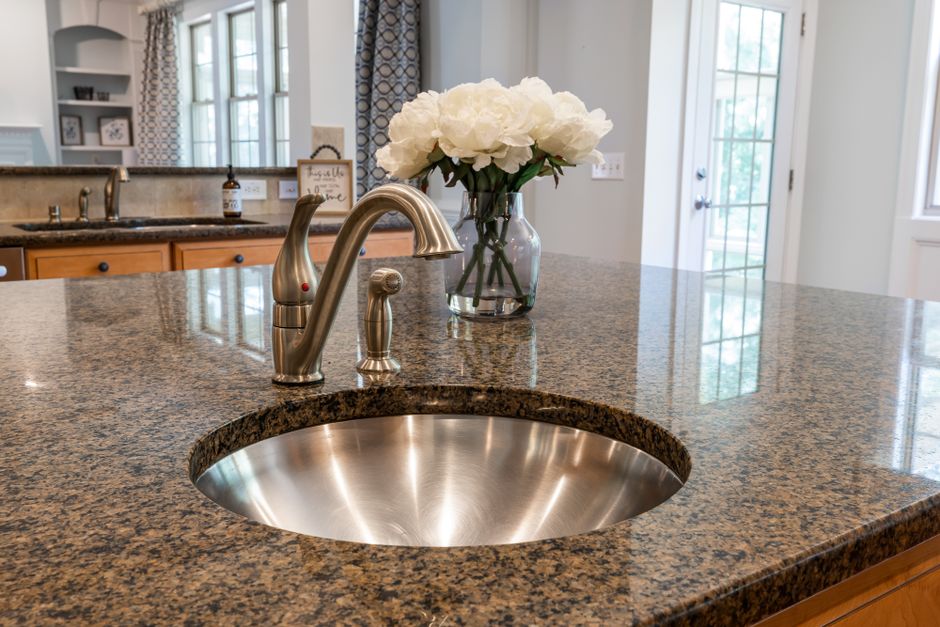
Stylish kitchen interior featuring granite countertop, stainless steel sink, and a vase of white peonies.

Granite Over Laminate Countertop in Riverside: Overlay or Tear Out?

2026-10-26

Granite can sometimes be installed over existing laminate, but only when the old top is flat, dry, solid, and square-edged, and when the extra height does not collide with your range, windows, or backsplash. In a Riverside kitchen, the answer depends less on the granite and more on what is hiding under the laminate. If any of the checks below fail, a full tear out is the safer job.

Start With the Edge of the Old Top

Elegant kitchen featuring dark wooden cabinets, granite countertops, and stainless steel appliances in a contemporary setting.

Overlay works only on a flat laminate top with a square edge. Many older tops have a rolled "no drip" front edge and a curved backsplash molded in one piece. Those curves have to be cut off, or the whole top has to come out, because stone needs flat, continuous support.

Run your hand along the front and the back of the counter. If the surface sweeps up into a curve at the wall or rolls over at the front, the top is not ready for stone as it stands. Cutting the curves away is possible on some tops, but it adds work and leaves a raw edge that must be hidden.

Press on the Laminate Around the Sink and Dishwasher

A contemporary kitchen featuring granite countertops and a vase of colorful flowers, creating a warm ambiance.

Most laminate is glued over particleboard, and particleboard swells and goes soft after slow leaks. Press firmly around the sink, the dishwasher, and the faucet. Soft, raised, or crumbly spots mean the substrate cannot carry stone, and the top should come out.

Riverside's dry air does not protect against this. The damage comes from leaks under the sink and around the dishwasher, not from humidity, so a dry climate is no reason to skip the check. Open the sink base and look at the underside of the top for staining, swelling, or dark rings.

Decide Whether the Cabinets Can Carry the Load

Granite is heavy, and in an overlay you also keep the weight of the old top. Most solid base cabinets handle it, but they still need a look. Check for these problems:

  • Loose face frames
  • Boxes that have racked out of square
  • Water damaged cabinet bottoms
  • Missing back rails or top stretchers

Cabinets in 1950s to 1970s Riverside homes may have been modified several times over the years, with sections cut for plumbing or moved during earlier remodels. Do not assume they are original or sound. A fabricator or installer should inspect them before the slab is ordered, not on install day.

Check That the Top Is Level

Stone needs a flat, level bed, or it can crack at cutouts and seams. A laminate top that has sagged or swelled passes that unevenness up to the stone. Shimming over an old top is less precise than shimming directly on the cabinet frames, which is one more reason a tear out often gives a better result.

Seam placement matters too. Seams in the new stone should not land directly over seams or weak joints in the old laminate. Movement in the substrate can show up later as a cracked or opened stone seam.

Plan for the Height Change

Laminate tops usually sit near 36 inches. An overlay adds the full thickness of the stone on top of the old surface. Using 2 cm stone (about 3/4 inch) adds that much, and a full 3 cm slab (about 1 1/4 inch) adds more. Measure the finished height before committing.

A tear out changes the math. A 3 cm slab placed directly on the cabinets ends up close to the original counter height, so the kitchen keeps its proportions. An overlay raises the counter noticeably, which affects seating, work comfort, and everything that sits against the counter.

Check the Range, Dishwasher, and Cutouts

Raising the counter affects appliances in ways that are easy to miss. Appliances will not fit the same after an overlay without remeasuring.

Range Height

A slide-in or freestanding range is meant to sit roughly level with the counter. Raise the counter and the cooktop can end up below the stone. Many ranges have adjustable leveling legs, but confirm the range can rise enough before you order.

Dishwasher Mounting

Dishwashers are usually screwed to the underside of the countertop through top brackets. Stone cannot take those screws, so the unit needs side mounting to the cabinets or a mounting kit made for stone. With an overlay, confirm the brackets still reach something solid.

Drop-In Cooktops and Sinks

Cutouts must go through both layers in an overlay, so the cooktop or sink rim rests on stacked material. Read the appliance installation guide for the cutout size and the required clearances from combustibles, and remeasure rather than relying on the old opening.

Think Hard About the Sink

A true undermount sink hangs from the underside of the stone. An overlay puts laminate and particleboard in the way, and their cut edges show at the sink opening and absorb water. Homeowners who want an undermount sink are usually better served by a full tear out.

A drop-in sink is more forgiving over an overlay, but the thicker deck still matters. Faucet shanks and mounting hardware must be long enough to reach through the added thickness, and older faucets may not reinstall cleanly. Riverside's hard water often leaves mineral buildup on old fixtures that makes them hard to remove and reseal, so this is a good time to replace them.

Look at the Backsplash, Windows, and Outlets

A molded laminate backsplash has to go. Raising the counter also shrinks the space between the counter and the upper cabinets, so tile layout, outlet boxes, and the bottom row of tile all shift. Measure the remaining gap and look at any outlets that will now sit close to the stone.

Windows deserve a check as well. In many ranch and tract kitchens, the window over the sink sits just above the counter. Added thickness can bring the stone into the sill or trim, so measure that clearance before deciding on overlay.

Hide the Old Edge and Support Any Overhang

In an overlay, the laminate edge sits under the granite edge and can show. Fabricators often use a deeper laminated or mitered stone edge to cover it. Ask to see how the finished front edge will look from both standing and seated height. An overlay does not look the same as a full slab install, and the edge is where the difference shows most.

Stone that extends past the cabinets for seating needs brackets or corbels beyond a small overhang. Thinner 2 cm material needs support sooner than 3 cm. An overlay does not change this requirement.

Know Which Overlay Product Is Being Quoted

"Overlay granite" can mean two different things. Thin prefabricated granite pieces made for overlay are a different product from full slabs cut to a template. The thin pieces rely heavily on adhesive and a sound substrate. Ask which one is in the quote, and ask what the installer will do if the old top turns out to be unsound once the sink is disconnected.

Secure the Stone for Earthquake Country

Granite is commonly set on silicone or adhesive rather than mechanically fastened. Riverside sits in an active seismic region, so make sure the stone is bonded properly and not just resting on the old top. Shaking can shift a loose top, and an overlay adds one more layer that has to stay bonded.

Overlay or Tear Out: A Practical Way to Decide

Overlay is worth considering when all of these are true: the laminate is flat with a square edge, the substrate is dry and firm, the cabinets are sound, and the extra height clears the range, window, and backsplash space. Overlay is not always the cheaper option overall once cutting, edge treatment, and appliance adjustments are counted, so compare the full scope rather than the slab alone.

Choose a full tear out when any of these show up: soft or swollen particleboard, a molded one-piece backsplash, a rolled front edge, a sagging surface, an undermount sink wish, or an appliance that cannot rise to the new height. Tear out also gives the installer a clean look at the cabinets, which is often when hidden problems come to light.

Care After Installation

Many granites benefit from periodic sealing. To check, place a little water on the surface and see whether it darkens the stone. Sealed granite resists stains but is not stainproof, and granite is not a place to set hot pans with no thought for risk.

Riverside's hard water leaves mineral rings around faucets and at the sink. Wipe the stone dry after use and clean with a pH neutral stone cleaner rather than acids or harsh scrubbing.

Read more →

Nearby Service Areas

We also cover quartz countertops pros in Temecula.